
Click the Button on the Right
A Galvanized Surface is a type of processing in which a layer of Zinc (Zn) is attached on the surface of steel or iron products, so that it can be protected from metal corrosion/rusting and their life can be saved.
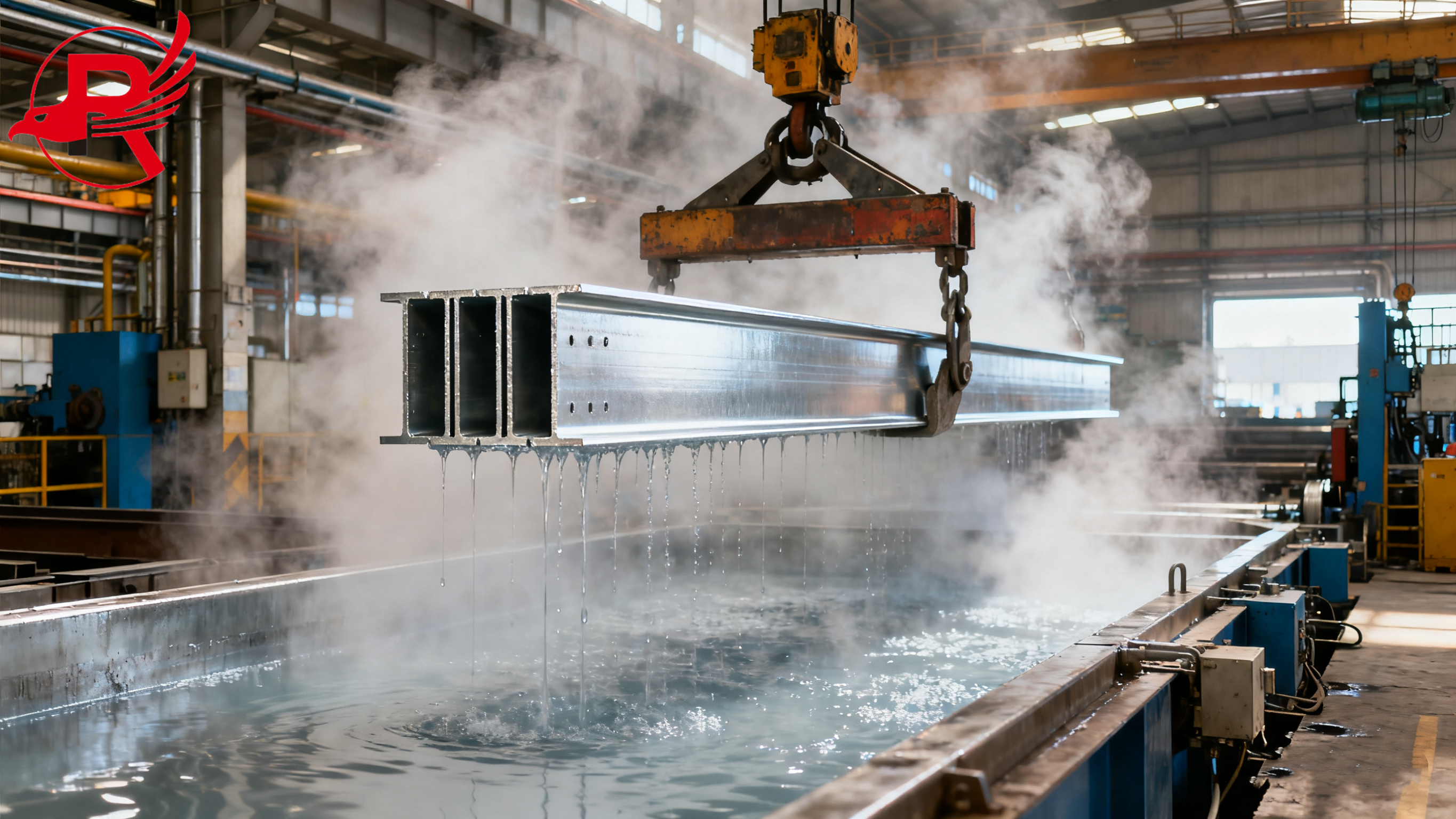
1. Surface Cleaning (Degreasing/Cleaning)
Removes grease, dust, and impurities from the steel surface.
Commonly used methods include alkaline cleaning or solvent cleaning.
2. Pickling
Uses dilute hydrochloric acid or sulfuric acid to remove surface oxide scale and rust.
It activates the steel surface and promotes the metallurgical bonding between zinc and steel.
3. Rinsing
Removes pickling residue to prevent impurities from appearing during subsequent galvanizing.
4. Fluxing/Pre-flux
Immerses the steel in a zinc chloride or ammonium chloride solution.
Prevents re-oxidation of the steel surface and improves the wettability of the zinc bath.
5. Hot-Dip Galvanizing
Immerses the treated steel parts in molten zinc (approximately 450°C).
Zinc forms a metallurgical bond with the steel surface, creating a strong, corrosion-resistant zinc layer.
6. Cooling & Zinc Drip Draining
Remove the steel component and drain off excess zinc.
Water cooling or natural cooling is acceptable.
1.High corrosion resistance: The zinc coating forms a barrier and can self-heal minor scratches.
2.Long service life: Can be used outdoors for many years without rusting.
3.Good adhesion: The hot-dip galvanized zinc layer forms a metallurgical bond with the steel, making it difficult to peel off.
4.Low maintenance costs: No need for frequent painting or coating maintenance.
5.Environmentally friendly: Recyclable.
1. Building and Structural Engineering
Steel structure buildings, bridges, factories, staircases, railings
Provides long-term corrosion protection, suitable for outdoor and coastal environments.
2. Transportation Facilities
Highway guardrails, traffic signal poles, railway track fittings
Resistant to rainwater, snowmelt, and road salt corrosion.
3. Power and Communication Equipment
Iron towers, light poles, transformer supports
Improves weather resistance and extends the lifespan of outdoor equipment.
4. Pipelines and Storage Tanks
Water pipes, oil and gas pipelines, storage tanks
Prevents corrosion and extends service life.
5. Industrial Equipment and Machinery
Factory machinery, conveying equipment, supports
Protects mechanical parts from moisture or chemical corrosion.
6. Agricultural Facilities
Greenhouse frames, fences, agricultural equipment
Provides weather protection and extends service life.
Galvanizing is the economical, efficient and dependable method of protecting steel from corrosion, and is used extensively in building structures, steel gratings, pipes, sheet piles, bridges, industrial machinery and outdoor facilities. Hot-dip galvanizing is applicable to thick structural steel members and electro-galvanizing to thin products or to products subject to special appearance requirements.
Have Questions?
Address
Bl20, Shanghecheng, Shuangjie Street, Beichen District, Tianjin, China
Phone
+86 13652091506