How to Choose H Beam for Your Project

In the rapid changing environment of building and civil engineering, the H beam (or wide flange beam) selection plays a very important role for safety, stability and economy of whole project. From high-rise building to industrial warehouse, from bridge to commercial building, the wrong H beam choice may cause structural problem, cost over run, or risk of life.
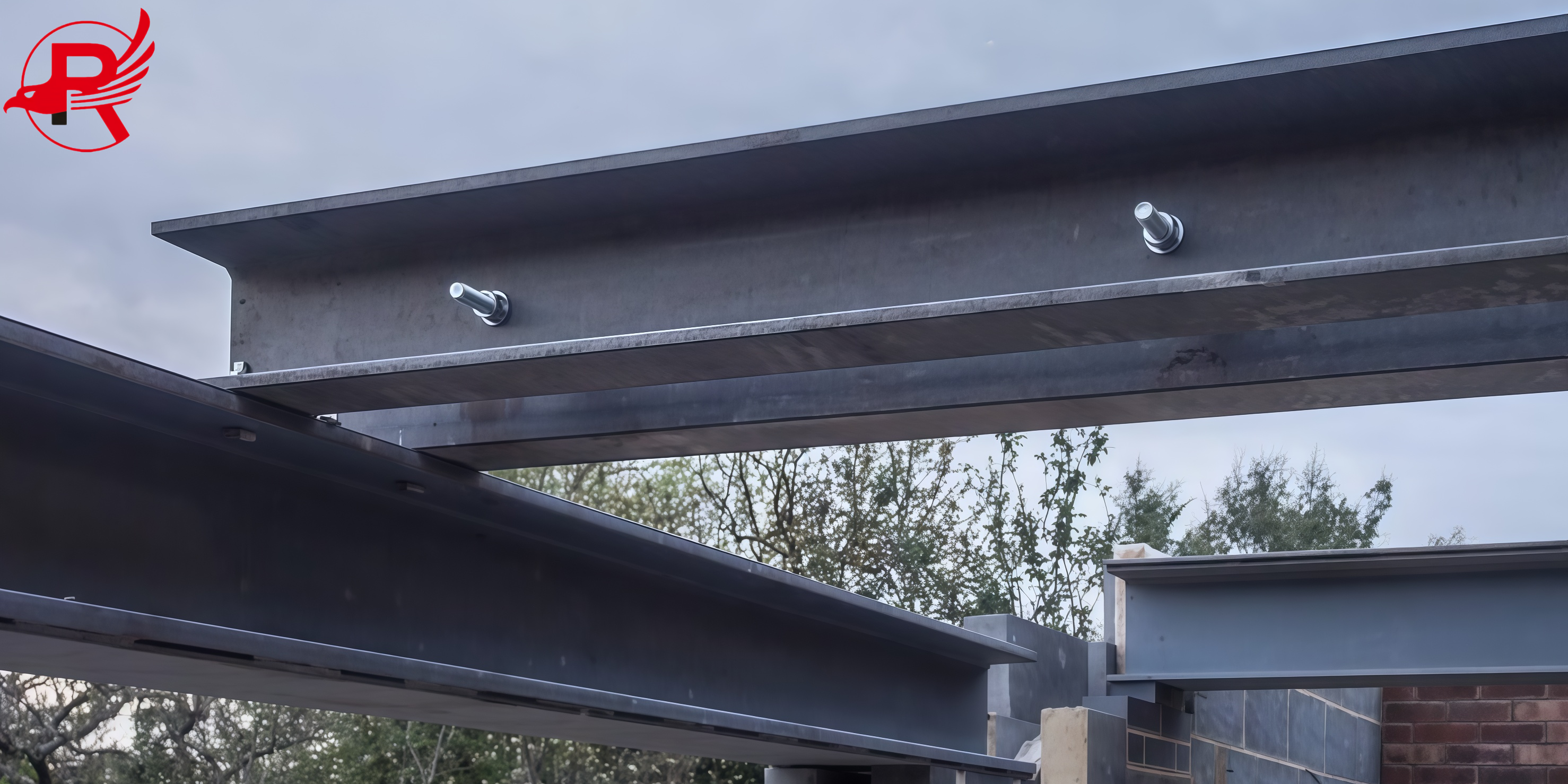
h-beam-vs-i-beam-768x576 (1)

Key Factors in Choosing the Right H Beam

The basis of selection begins with knowing the loads the beam must support. Among these are:

1.Dead Loads (Permanent Weight of the Building Itself)

2.Live loads (people, furnishings, cars, snow, and more)

3.Dynamic loads (wind, seismic forces)

Structural engineering professionals leverage structural analysis software or design codes (for example, AISC in the US, Eurocode in Europe, or GB standards in China) to calculate bending moments, shear forces, and deflection limits.

Span Length and Support Conditions

Long spans require beams with greater moment of inertia to reduce deflection. For instance:

1.Short spans (up to 6-8m) in light commercial are usually done with smaller sections ~ 150-200 mm height.

2.Medium spans (26-49 feet) in warehouses generally need 10-14" H beams.

3.Large spans or heavy-duty purposes (bridges, large industrial halls) require 400 mm+ sections or thicker grades.

Material Grade and Strength

Frequently used steel types are:

1.ASTM A36 / A572 / A992 H Beam(US standard, approximate yield strength 250-345 MPa)

2.EN S235 / S275 / S355 H  Beam(European norm)

3.GB Q235 / Q345  H Beam(Chinese norm)

Higher-strength grades (e.g., Q345B or S355) permit lighter sections for the same load, which reduces total material weight and cost of foundation — this is particularly attractive in seismic zones or for high-rise construction.

Size and Dimensional Specifications

H beams are designated by height × width × web thickness × flange thickness (metric) or nominal depth + weight per foot (imperial, e.g., W8×40).

Popular sizes include:

1.Light-duty: 100×100 mm to 200×100 mm

2.Medium-duty: 250×250 mm to 300×300 mm

3.Heavy-duty: 400×200 mm and above

Always refer to standard size charts for section properties (moment of inertia, section modulus, weight per meter) to match project needs.

Environmental and Project-Specific Considerations

Corrosion resistance: Use galvanized, painted, or weather steel (e.g., Corten) in outdoor or moist-humid environments.

Weldability and formability: Check that the grade is compatible with the welding processes used on site.

Cost and availability: Consider the performance against the local supply chains—overspecification can increase cost by 20–50%.

Consult Professionals

Preliminary coding may utilize online calculators or span tables, but final selection must be verified by a licensed structural engineer. Standard sizes will be code compliant and structurally sound – never depend on rule of thumb only calculations.

Get A Free Quote or Ask Product-related Questions!

China Royal Steel Ltd

Address

Bl20, Shanghecheng, Shuangjie Street, Beichen District, Tianjin, China

Phone

+86 13652091506


Post time: Feb-27-2026