New Policy On China’s Steel Export Licensing System

Beijing, China – December 15, 2025 – A comprehensive China steel export license system covering about 300 categories of steel products has been formally announced by the Chinese Ministry of Commerce. It will go into effect on January 1, 2026. The objectives of this strategic policy are to counteract growing international trade protectionism, balance domestic supply and demand, and stabilize the world's steel markets.

For the specified product categories, all steel exporters are required by the new regulations to obtain export licenses issued by the government. In order to ensure that exports are tracked, measured, and in line with global market conditions, the measure will be applied to hot-rolled steel plates, cold-rolled sheets, galvanized steel, structural steel, and related long products.
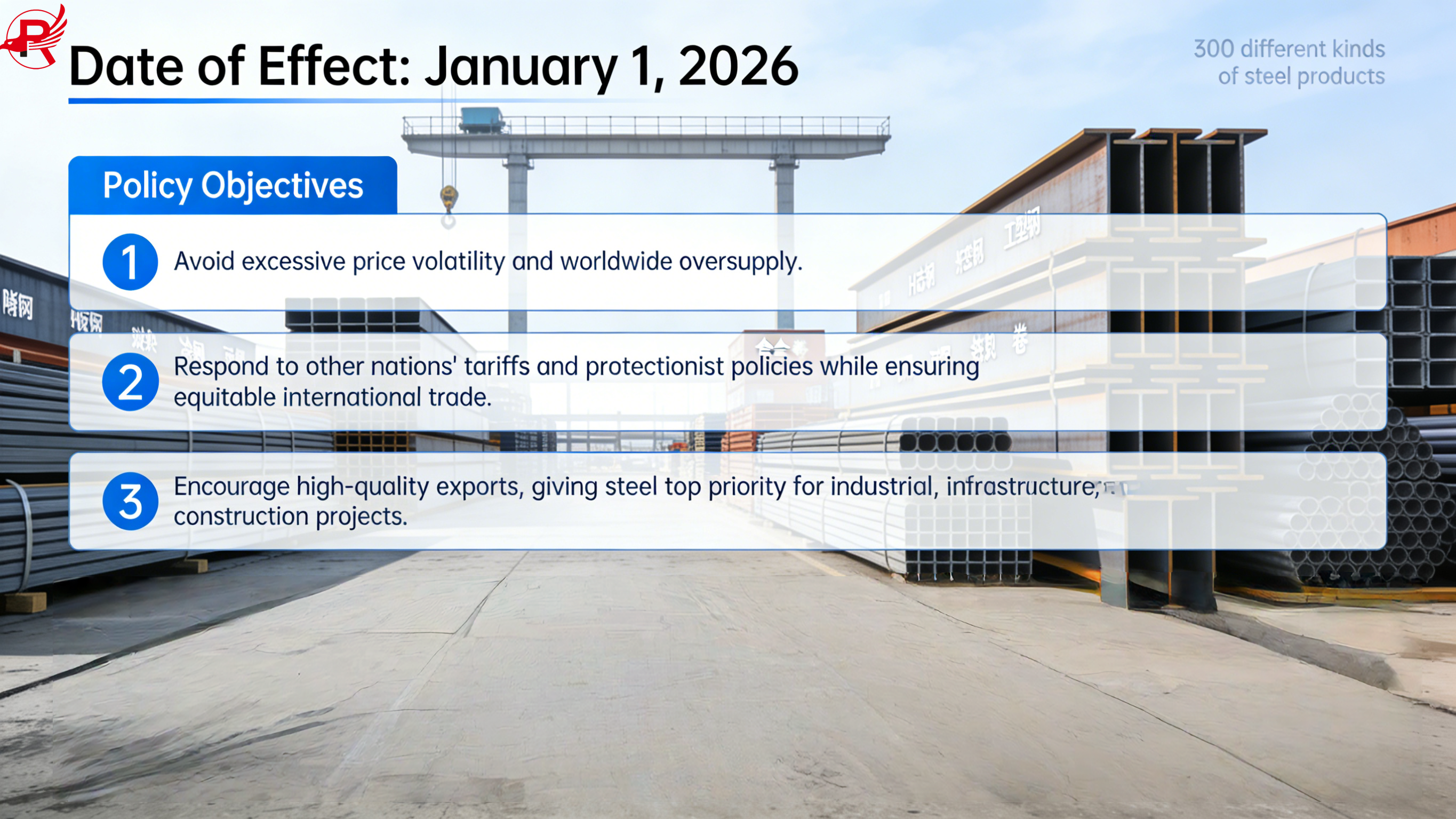
Key Features of the Export Licensing System

Scope: About 300 different kinds of steel products, such as channels, steel plates, H-beams, I-beams, hot-rolled and cold-rolled coils, carbon steel, and alloy steel.

Date of Effect: January 1, 2026.

Goal:

1.Avoid excessive price volatility and worldwide oversupply.

2.Respond to other nations' tariffs and protectionist policies while ensuring equitable international trade.

3.Encourage high-quality exports, giving steel top priority for industrial, infrastructure, and construction projects.

Compliance Requirements: Before shipping, exporters must provide the appropriate authorities with comprehensive product, shipment, and contract information. Licenses will be granted in accordance with project specifications, order type, and production capacity. Export limitations, fines, or suspension from the licensing program are possible outcomes of noncompliance.

steel

Industry Implications

According to analysts, the global steel supply chain will be significantly impacted by the new licensing system:

Export Shift: Project-specific and high-value steel for engineering, construction, and industrial applications will be given priority, while low-value and bulk steel shipments may decrease.

Price Stabilization: It is anticipated that tracking and measuring steel exports will lessen market volatility in important importing regions, such as the Americas, Europe, and Southeast Asia.

Strategic Planning for Exporters: Businesses that trade steel internationally must optimize supply for projects that have been approved, match their export portfolios with licensing requirements, and make sure that compliance paperwork is completed on time.

Global Market Reactions

The new policy is being closely examined by foreign traders and buyers. A shift toward planned, project-oriented steel procurement is anticipated by industry experts, with a focus on structural steel, galvanized steel, and other high-demand products for infrastructure, industrial, and civil engineering projects.

Export Recommendations

A strategic approach to controlling international steel flows, promoting domestic production quality, and upholding a balanced global supply chain is China's steel export licensing system. It is recommended that exporters:

1.Perform internal audits of the steel product categories that the license affects.

2.Sign long-term agreements with foreign customers, emphasizing engineering and project-specific supply.

3.To guarantee continuous export operations, bolster compliance management.

China Royal Steel Ltd

Address

Bl20, Shanghecheng, Shuangjie Street, Beichen District, Tianjin, China

Phone

+86 13652091506


Post time: Dec-15-2025