


Let us give you a free quote 24 hours a day or to consult with us about more product-related questions!
HEA HEB H Beam Profile Structural Carbon Steel H Iron Beam

PRODUCT PRODUCTION PROCESS
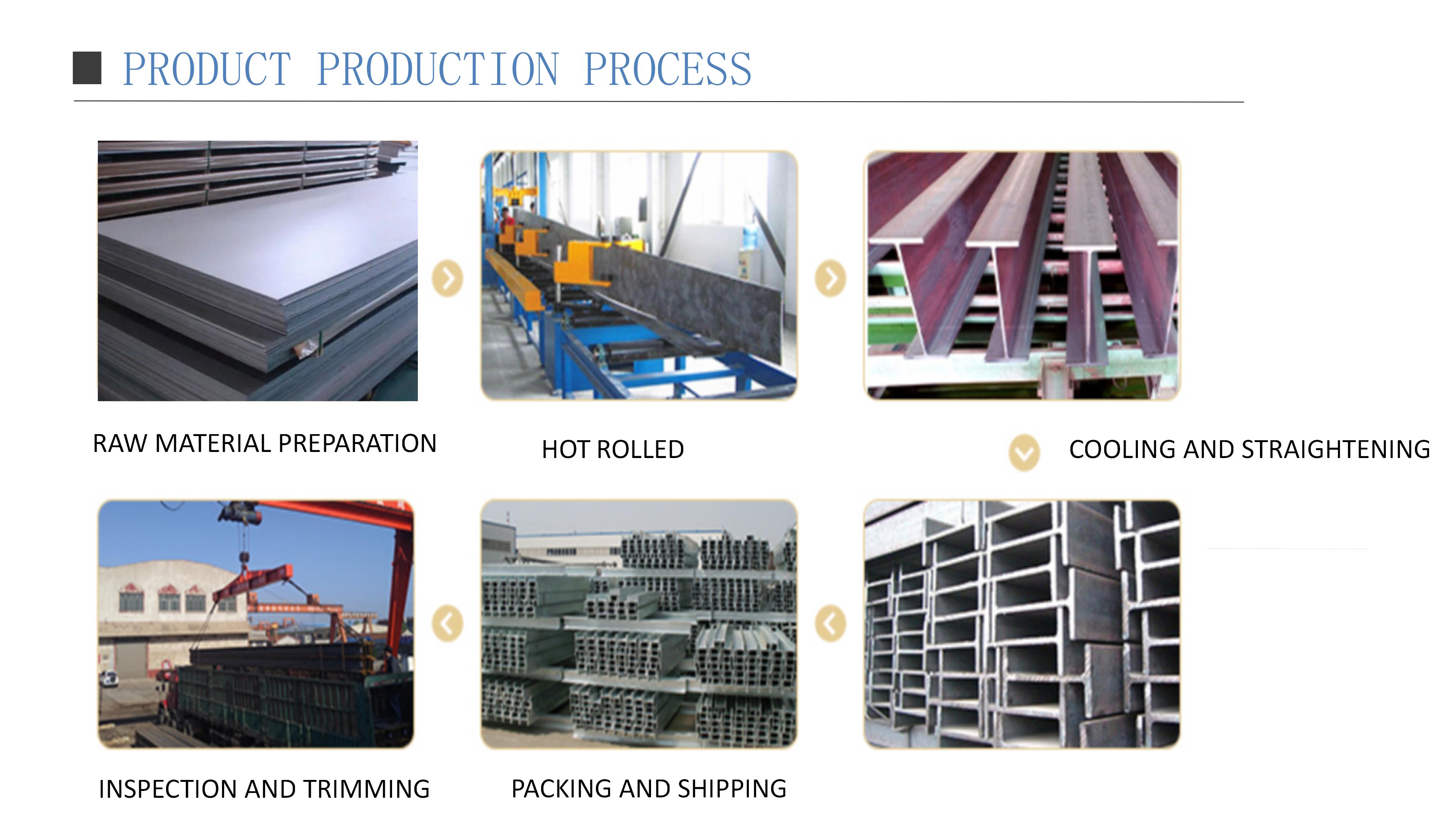
The following is the general procedure for the manufacture of hollow section H-beam outer standard:
Preparation of raw material: The raw material for manufacture of H-beam steel section is usually steel billet. To clean and heat the steel billet for future working and shaping.
Hot-rolling procedure: Hot rolling processing of steel billet is preheated. When heated to rolling condition, the steel billet is rolled in hot rolling mill, by a series of rollers and formed to near H-shape shape.
Cold working (optional): Hot rolled H beam steel may be cold worked, such as cold rolling, drawing, etc. to improve the precision and surface quality of the H beam steel in some applications.
Cutting and Finishing: Roll formed H Channels need to be cut and finished to size and length to meet specific requirements of customer after rolling and cold working.
Surface treatment: Clean and anti-rust treatment of H steel, to guarantee the surface quality and rust resistance of products.
Inspection and packing: Carry out quality inspection on the produce H steel including the appearance quality, dimensional accuracy, mechanical property etc. After the test, it will be packed and sent to customer.
PRODUCT SIZE
| Designation | Unt Weight kg/m) |
Standard Secional imension mm |
Sectional Ama (cm² |
|||||
| W | H | B | 1 | 2 | r | A | ||
| HE28 | AA | 61.3 | 264.0 | 280.0 | 7.0 | 10.0 | 24.0 | 78.02 |
| A | 76.4 | 270.0 | 280.0 | 80 | 13.0 | 24.0 | 97.26 | |
| B | 103 | 280.0 | 280.0 | 10.5 | 18.0 | 24.0 | 131.4 | |
| M | 189 | 310.0 | 288.0 | 18.5 | 33.0 | 24.0 | 240.2 | |
| HE300 | AA | 69.8 | 283.0 | 300.0 | 7.5 | 10.5 | 27.0 | 88.91 |
| A | 88.3 | 200.0 | 300.0 | 85 | 14.0 | 27.0 | 112.5 | |
| B | 117 | 300.0 | 300.0 | 11.0 | 19.0 | 27.0 | 149.1 | |
| M | 238 | 340.0 | 310.0 | 21.0 | 39.0 | 27.0 | 303.1 | |
| HE320 | AA | 74.3 | 301.0 | 300.0 | 80 | 11.0 | 27.0 | 94.58 |
| A | 97.7 | 310.0 | 300.0 | 9.0 | 15.5 | 27.0 | 124.4 | |
| B | 127 | 320.0 | 300.0 | 11.5 | 20.5 | 27.0 | 161.3 | |
| M | 245 | 359.0 | 309.0 | 21.0 | 40.0 | 27.0 | 312.0 | |
| HE340 | AA | 78.9 | 320.0 | 300.0 | 85 | 11.5 | 27.0 | 100.5 |
| A | 105 | 330.0 | 300.0 | 9.5 | 16.5 | 27.0 | 133.5 | |
| B | 134 | 340.0 | 300.0 | 12.0 | 21.5 | 27.0 | 170.9 | |
| M | 248 | 377.0 | 309.0 | 21.0 | 40.0 | 27.0 | 315.8 | |
| HE360 | AA | 83.7 | 339.0 | 300.0 | 9.0 | t2.0 | 27.0 | 106.6 |
| A | 112 | 350.0 | 300.0 | 10.0 | 17.5 | 27.0 | 142.8 | |
| B | 142 | 360.0 | 300.0 | 12.5 | 22.5 | 27.0 | 180.6 | |
| M | 250 | 395.0 | 308.0 | 21.0 | 40.0 | 27.0 | 318.8 | |
| HE400 | AA | 92.4 | 3780 | 300.0 | 9.5 | 13.0 | 27.0 | 117.7 |
| A | 125 | 390.0 | 300.0 | 11.0 | 19.0 | 27.0 | 159.0 | |
| B | 155 | 400.0 | 300.0 | 13.5 | 24.0 | 27.0 | 197.8 | |
| M | 256 | 4320 | 307.0 | 21.0 | 40.0 | 27.0 | 325.8 | |
| HE450 | AA | 99.8 | 425.0 | 300.0 | 10.0 | 13.5 | 27.0 | 127.1 |
| A | 140 | 440.0 | 300.0 | 11.5 | 21.0 | 27.0 | 178.0 | |
| B | 171 | 450.0 | 300.0 | 14.0 | 26.0 | 27.0 | 218.0 | |
| M | 263 | 4780 | 307.0 | 21.0 | 40.0 | 27.0 | 335.4 | |
| Designatio | Unit Weight kg/m) |
Standad Sectional Dimersion (mm) |
Sectiona Area (cm²) |
|||||
| W | H | B | 1 | 2 | r | A | ||
| HE50 | AA | 107 | 472.0 | 300.0 | 10.5 | 14.0 | 27.0 | 136.9 |
| A | 155 | 490.0 | 300.0 | t2.0 | 23.0 | 27.0 | 197.5 | |
| B | 187 | 500.0 | 300.0 | 14.5 | 28.0 | 27.0 | 238.6 | |
| M | 270 | 524.0 | 306.0 | 21.0 | 40.0 | 27.0 | 344.3 | |
| HE550 | AA | t20 | 522.0 | 300.0 | 11.5 | 15.0 | 27.0 | 152.8 |
| A | 166 | 540.0 | 300.0 | t2.5 | 24.0 | 27.0 | 211.8 | |
| B | 199 | 550.0 | 300.0 | 15.0 | 29.0 | 27.0 | 254.1 | |
| M | 278 | 572.0 | 306.0 | 21.0 | 40.0 | 27.0 | 354.4 | |
| HE60 | AA | t29 | 571.0 | 300.0 | t2.0 | 15.5 | 27.0 | 164.1 |
| A | 178 | 500.0 | 300.0 | 13.0 | 25.0 | 27.0 | 226.5 | |
| B | 212 | 600.0 | 300.0 | 15.5 | 30.0 | 27.0 | 270.0 | |
| M | 286 | 620.0 | 305.0 | 21.0 | 40.0 | 27.0 | 363.7 | |
| HE650 | AA | 138 | 620.0 | 300.0 | t2.5 | 16.0 | 27.0 | 175.8 |
| A | 190 | 640.0 | 300.0 | t3.5 | 26.0 | 27.0 | 241.6 | |
| B | 225 | 660.0 | 300.0 | 16.0 | 31.0 | 27.0 | 286.3 | |
| M | 293 | 668.0 | 305.0 | 21.0 | 40.0 | 27.0 | 373.7 | |
| HE700 | AA | 150 | 670.0 | 300.0 | 13.0 | 17.0 | 27.0 | 190.9 |
| A | 204 | 600.0 | 300.0 | 14.5 | 27.0 | 27.0 | 260.5 | |
| B | 241 | 700.0 | 300.0 | 17.0 | 32.0 | 27.0 | 306.4 | |
| M | 301 | 716.0 | 304.0 | 21.0 | 40.0 | 27.0 | 383.0 | |
| HE800 | AA | 172 | 770.0 | 300.0 | 14.0 | 18.0 | 30.0 | 218.5 |
| A | 224 | 790.0 | 300.0 | 15.0 | 28.0 | 30.0 | 285.8 | |
| B | 262 | 800.0 | 300.0 | 17.5 | 33.0 | 30.0 | 334.2 | |
| M | 317 | 814.0 | 303.0 | 21.0 | 40.0 | 30.0 | 404.3 | |
| HE800 | AA | 198 | 870.0 | 300.0 | 15.0 | 20.0 | 30.0 | 252.2 |
| A | 252 | 800.0 | 300.0 | 16.0 | 30.0 | 30.0 | 320.5 | |
| B | 291 | 900.0 | 300.0 | 18.5 | 35.0 | 30.0 | 371.3 | |
| M | 333 | 910.0 | 302.0 | 21.0 | 40.0 | 30.0 | 423.6 | |
| HEB1000 | AA | 222 | 970.0 | 300.0 | 16.0 | 21.0 | 30.0 | 282.2 |
| A | 272 | 0.0 | 300.0 | 16.5 | 31.0 | 30.0 | 346.8 | |
| B | 314 | 1000.0 | 300.0 | 19.0 | 36.0 | 30.0 | 400.0 | |
| M | 349 | 1008 | 302.0 | 21.0 | 40.0 | 30.0 | 444.2 | |
EN H-Shaped Steel
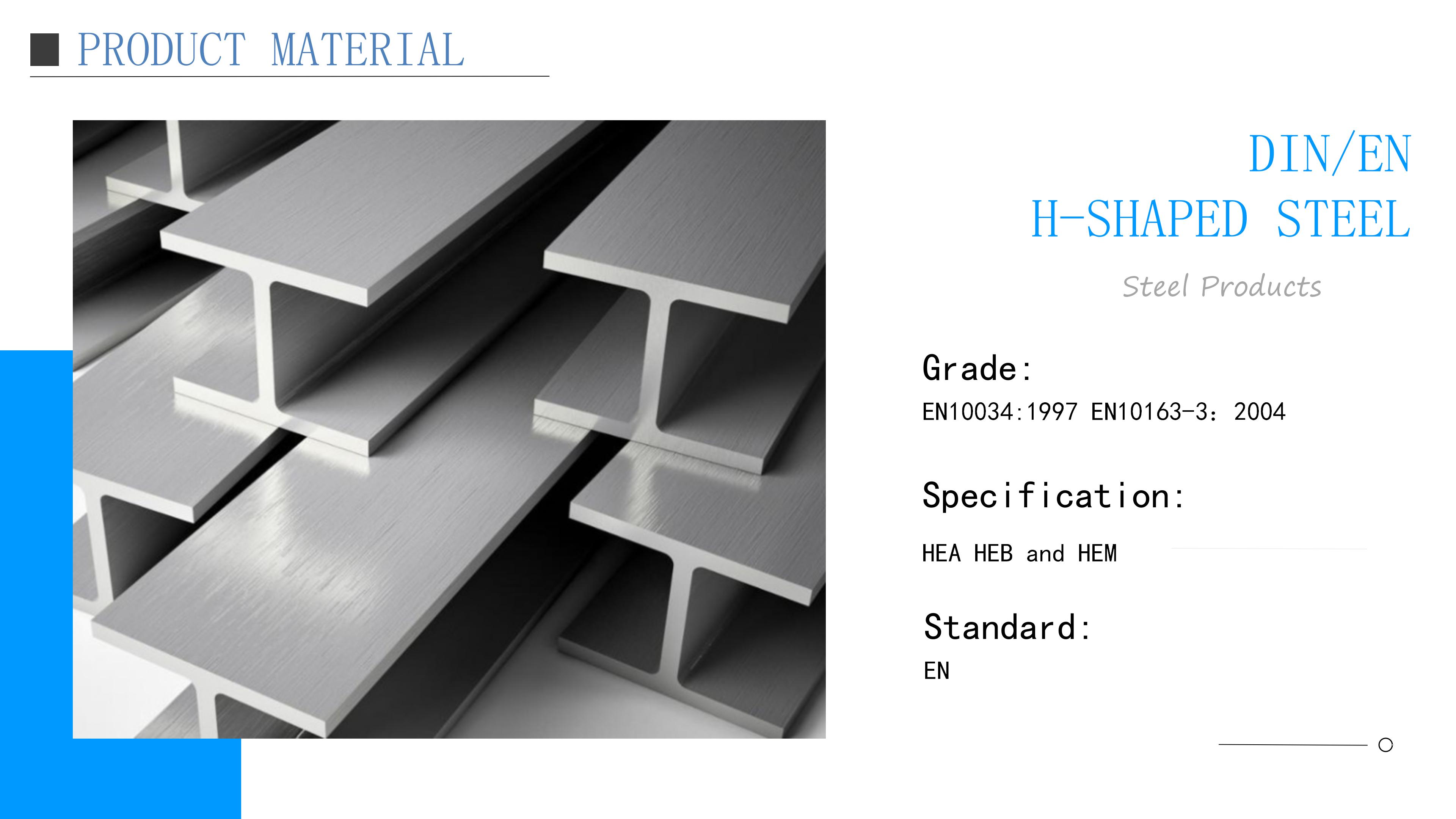
Grade: EN10034:1997 EN10163-3:2004
Specification:HEA HEB and HEM
Standard: EN
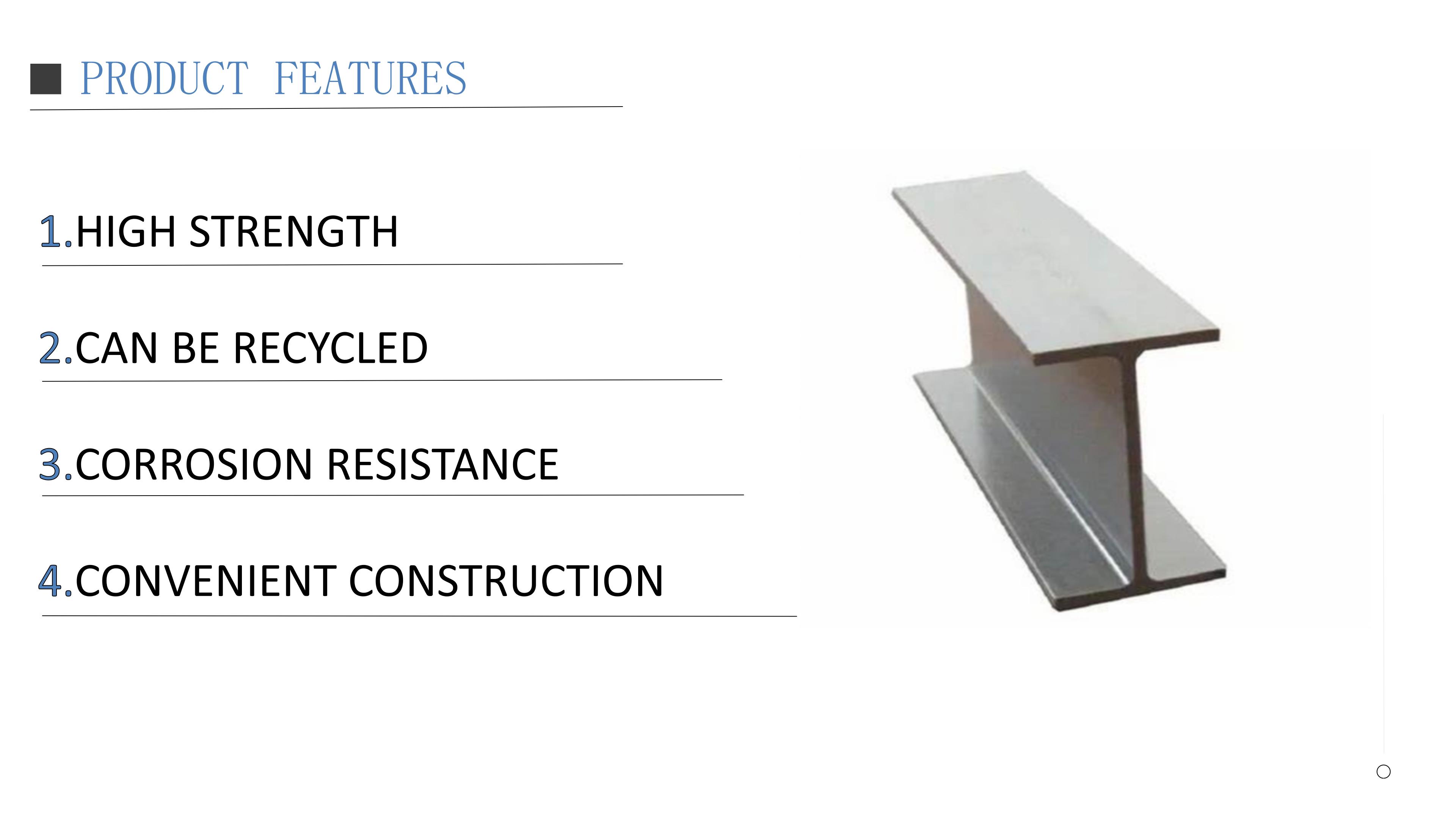
FEATURES
High strength: The design of the cross section of H-beam steels makes it high bending strength and bearing strength, so it can be applied to the larg span beam and heavy load beam.
Good stability: Due to the shape of the cross section, H-shaped steel exhibits good stability under pressure and tension which help the structure to remain stable and safe.
Convenient construction: H-shaped steel shape design is simple, can be well connected directly to steel columns, steel beams easy to connect, is conducive to the project construction progress.
High resource utilization: The shape design of H-beam steel can play to the performance of steel, reduce the waste of material, is beneficial to resources conservation and environmental protection.
Wide application: H-beam steel is applicable for all kinds of building structures, bridge construction, machinery manufacturing and so on, The developing prospect is rather broad.
General external standard H-Beams have a high strength, good stability and easy construction. As a kind of important structural steel material, it is widely used in various projects.
PRODUCT INSPECTION
To ensure product quality, safety, and compliance with international standards, H Beams should undergo comprehensive inspection covering the following aspects:
1. Appearance Quality
The surface of H Beams should be smooth, clean, and free from visible defects such as cracks, dents, scratches, excessive rust, or other surface imperfections. The overall appearance must meet relevant standards and customer specifications.
2. Dimensional Accuracy
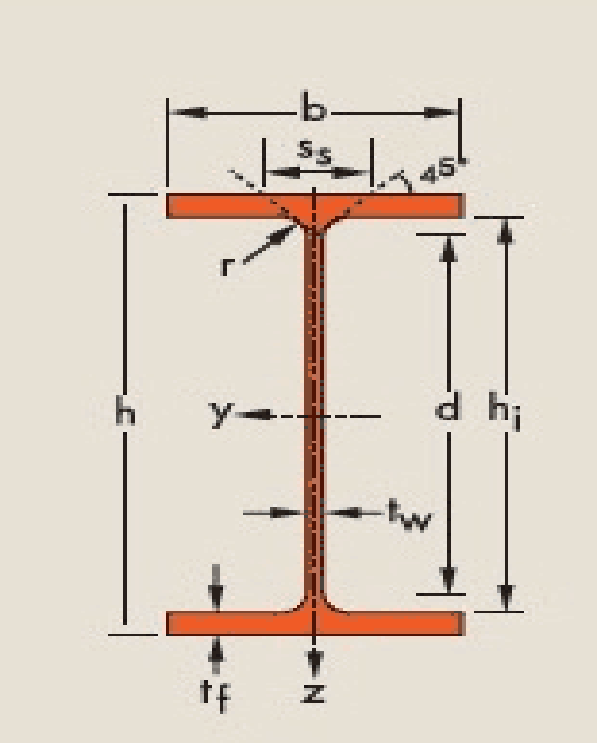
Key dimensions including length, height, flange width, web thickness, and flange thickness should comply with applicable standards and project requirements to ensure precise structural performance.
3. Straightness and Curvature
The curvature of H Beams should remain within allowable tolerances. Measurements are performed to verify beam straightness and parallel alignment according to industry standards.
4. Twist Control
Twist deformation must be inspected to ensure proper vertical alignment and structural stability. Excessive twisting may affect installation and load-bearing performance.
5. Weight Tolerance
Actual beam weight should conform to specified standards and allowable deviations, ensuring consistency in material quality and structural calculations.
6. Chemical Composition Analysis
Chemical elements such as carbon, manganese, phosphorus, and sulfur are tested to verify compliance with material standards, especially for welding, fabrication, and specialized applications.
7. Mechanical Property Testing
Mechanical performance including yield strength, tensile strength, elongation, and impact resistance is tested to confirm the beam meets required structural specifications.
8. Non-Destructive Testing (NDT)
Ultrasonic testing or other non-destructive inspection methods may be conducted to detect internal defects and ensure overall structural integrity and reliability.
9. Packaging and Marking Inspection
Packaging and product markings should meet export and transportation standards, with clear identification of grade, size, heat number, and quantity for traceability and safe delivery.
Quality Assurance
Comprehensive inspection procedures ensure every H Beam meets international quality standards and customer requirements, providing reliable performance for construction, infrastructure, industrial, and engineering applications worldwide.

PRODUCT APPLICATION
External standard H beams find their application in the construction and machinery industry widely, such as but not limited to the following: Structural engineering and bridge engineering, mechanical, ship building and steel structure erection.

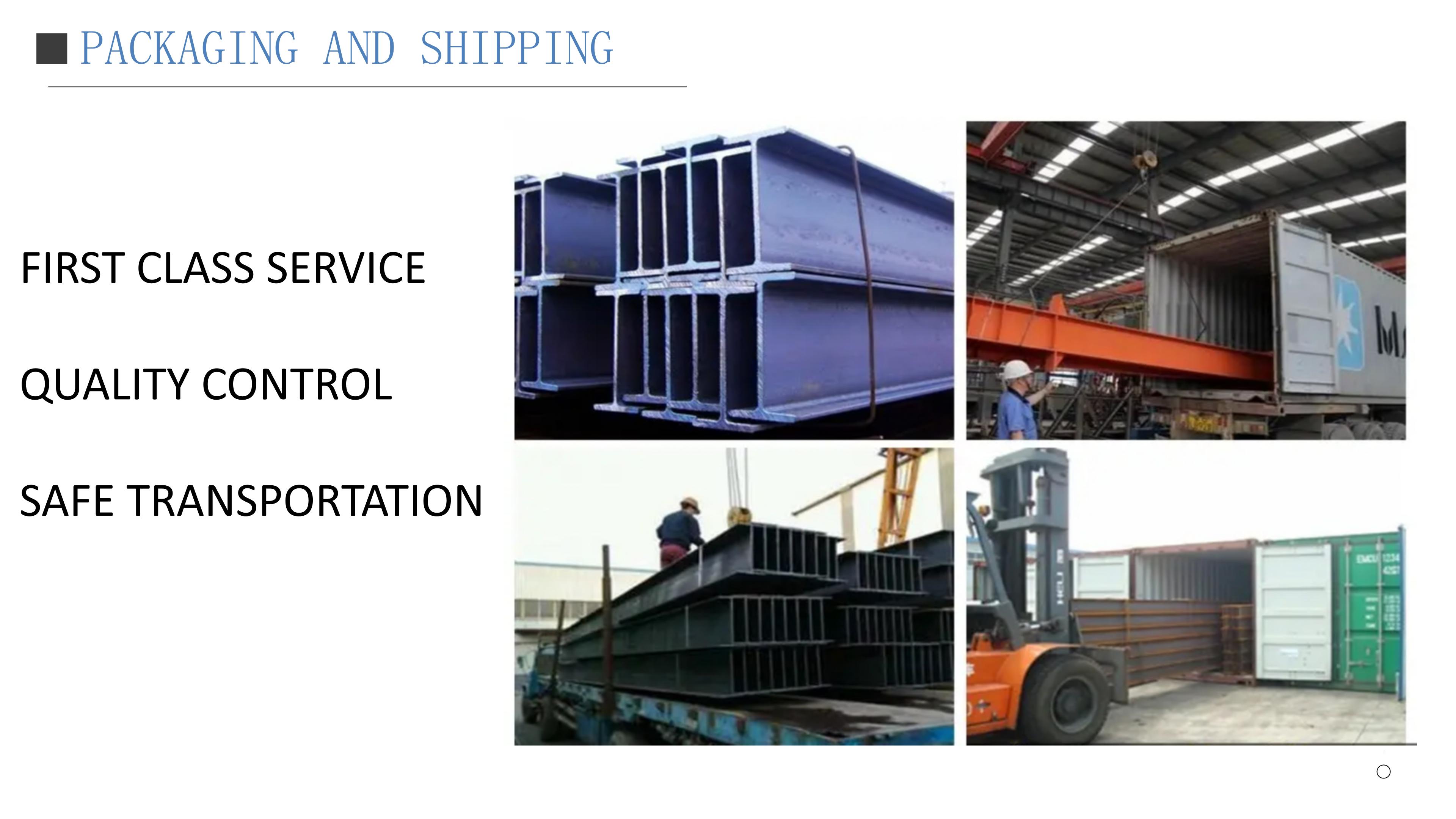
PACKAGING AND SHIPPING
The packaging and shipping of external normal H-beams are generally carried out as follows:
Packaging: H steel is generally packaged according to the shipping method of customers to avoid damage to the surface. Standard packaging is bare packaging, wooden pallet packaging, plastic packaging and so on. During the packaging, the surface of H beam steel should not be scratched and rusted.
Labeling: Mark the clear product information on the surface of the packaging, such as model, specification, quantity, etc. , it is convenient for identification and management.
Loading: It is also necessary to avoid collision and extruding with load on the process of packed H beam steel loading and transportation.
Shipping: Select suitable transportation instruments as truck, railway transportation and so on and according to customers' request and distance do choose suitable transportation way.
Unloading: When yhe H steel bar reaches the terminal, it's unloading should be done carefully, so as not to damage the H-beam steel.
Storage: Keep H-beam ste] in a dry, ventilated place to prevent moiture or other adverse influence.

COMPANY STRENGTH
FAQ
1. What materials are available for H Beams?
We offer H Beams in various grades, including ASTM A36, ASTM A572 Grade 50, ASTM A992, S235, S275, S355, Q235B, Q355B, and SS400 to meet different project requirements.
2. What are the common sizes and lengths of H Beams?
Standard lengths are typically 6m and 12m, while customized lengths and dimensions are available according to customer specifications.
3. What is the difference between H Beam and I Beam?
H Beams have wider flanges and higher load-bearing capacity, making them suitable for heavy structural applications, while I Beams are commonly used for lighter structural support.
4. Can H Beams be customized?
Yes, we provide customized services including cutting, drilling, welding, surface treatment, and fabrication based on engineering drawings.
5. What surface treatments are available?
Available surface finishes include black (as-rolled), painted, galvanized, and anti-corrosion coatings depending on environmental conditions.
Write your message here and send it to us
Products categories
-

EN 10025 S460 H Beam | HEA HEB European Standar...
-

Supplier Hot Selling Q355b Low Alloy 16mn S275j...
-

European Steel Structures Steel Profiles EN S27...
-

EN HEA300 / HEA400 / HEA500 Beam Structural Ste...
-

Hot Sale JIS G3101 SS400 H Beam Carbon Structur...
-

Factory Price ASTM Hot Dipped Zinc Galvanized A...