
Products
-
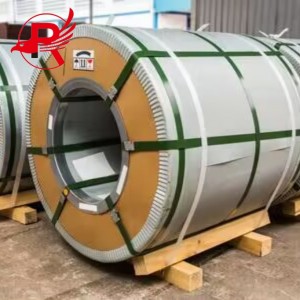
Chinese Supplier Non-Oriented Silicon Steel Silicon Steel Coil For Construction
In order to meet the needs of punching and shearing processing when manufacturing electrical appliances, it is also required to have a certain plasticity. In order to improve the magnetic susceptibility and reduce the hysteresis loss, the harmful impurity content is required to be as low as possible, and the plate shape is required to be flat and the surface quality is good.
-
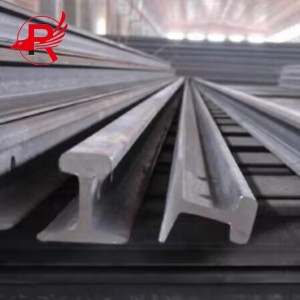
AREMA Standard Steel Rail Railway Rail Quality Is High
AREMA Standard Steel Rail is an important part of railway transport to carry the weight of the train, and it is also the infrastructure of the train. It is made of high-strength steel, has good strength and wear resistance, and can withstand great pressure and impact forces.
-
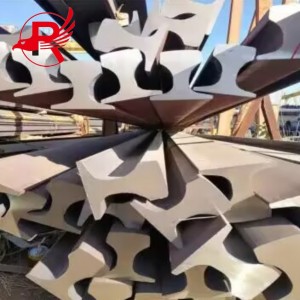
High Quality Heavy AREMA Standard Steel Rail Track U71Mn Standard Railway
According to the different materials, the AREMA Standard Steel Rail can be divided into ordinary carbon structure rail, low-alloy high-strength rail, wear-resistant and heat-resistant rail. The common carbon structure rail is the most common one, which has the characteristics of high strength and good wear resistance. The low alloy high strength rail has higher strength and deformation resistance. Wear-resistant and heat-resistant rail is suitable for high-speed railways and heavy transport lines.
-
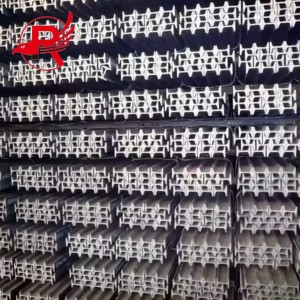
AREMA Standard Steel Rail 55Q,Mining Tunnel Steel Rails,Forge Steel Rail
Application scenario: AREMA Standard Steel Rail is mainly used for railway passenger lines, but also can be used for smaller freight lines. Because of its simple structure and low cost, it is widely used in railway construction, and ordinary rail has long service life, strong pressure resistance and wide adaptability.
-
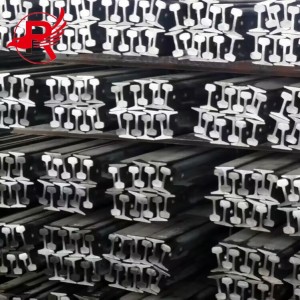
Hot Sale Steel Quality Rail Railway Track in Bulk Used Rail
First of all, the production of steel rails needs to go through multiple processes. The first is the preparation of raw materials, the selection of high-quality steel, and heating treatment. Then there is the rolling process, which deforms the steel through continuous rolling at high temperatures. Then cooling, grinding and cutting processes, and finally to meet the standard size requirements of the rail.
-
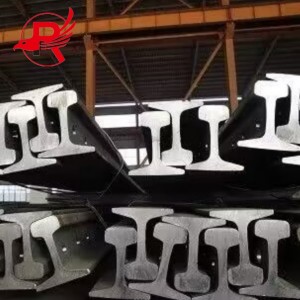
Good Quality AREMA Standard Steel Rail Supplier Used In Rail Track
As an important part of railway transportation, AREMA Standard Steel Rail plays an indispensable role in modern traffic. Through the introduction of the definition, classification, production process and market prospect of rail, we can have a more comprehensive understanding of the use and development trend of rail.
-
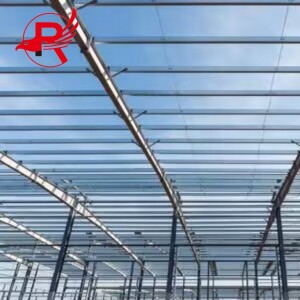
Prefabricated Steel Structures In China Are Of High Quality
Steel structures are widely used in high-rise buildings, large factories, long-span space structures, light steel structures, and residential buildings. In highway and railway bridges, thermal power main plants and boiler steel frames, transmission and transformation towers, radio and television communication towers, offshore oil platforms, nuclear power plants, wind power generation, water conservancy construction, underground foundation steel sheet piles, etc. Urban construction requires a large number of steel structures, such as subways, urban light railways, overpasses, environmentally friendly buildings, public facilities, temporary buildings, etc. In addition, steel structures are also widely used in small lightweight structures such as supermarket shelves, scaffolding, square sketches, sculptures and temporary exhibition halls.
-
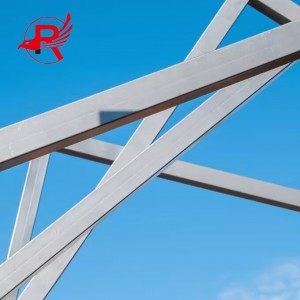
Modern Prefab Steel Structure Building Prefabricated Warehouse/Workshop/Aircraft Hangar/Office Construction Material
Steel structure engineering has the advantages of high strength, light weight, fast construction speed, recyclable, safe and reliable, flexible design, etc., so it has been widely used in construction, bridge, tower and other fields. With the continuous development and improvement of steel structure engineering technology, it is believed that steel structure engineering will play an increasingly important role in the future construction field
-
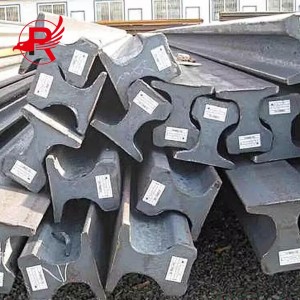
Competitive Price DIN Standard Steel Rail Rail Transport Construction
DIN Standard Steel Rail transportation, the rail is an indispensable component, so its reliability must be guaranteed. As the infrastructure of railway transportation, every inch of rail must ensure quality and precision, so as to ensure the safety and stability of the train. Therefore, the processing and quality of the rail require strict supervision and testing by professional and technical personnel.
In short, as an important part of railway transportation, rail has the characteristics of high strength, wear resistance, corrosion resistance and strong reliability, which is the key to ensure the safe and efficient operation of trains.
-
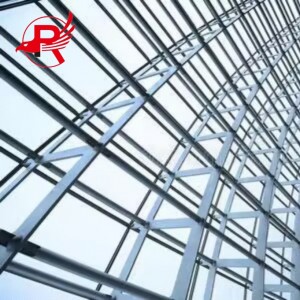
High Quality Container House Prefab Steel Structure 2 Bedroom Movable Homes China Supplier For Sale
As an efficient, safe and sustainable building structure, steel structure will play an important role in the future construction field. With the development of science and technology and the progress of society, steel structure will continue to innovate and improve to meet people’s continuous pursuit of building quality, environmental protection and intelligence.Practice has shown that the greater the force, the greater the deformation of the steel member. However, when the force is too large, the steel members will fracture or severe and significant plastic deformation, which will affect the normal work of the engineering structure. In order to ensure the normal working of engineering materials and structures under load, it is required that each steel member should have sufficient load-bearing capacity, also known as bearing capacity. The bearing capacity is mainly measured by the sufficient strength, stiffness and stability of the steel member.
-
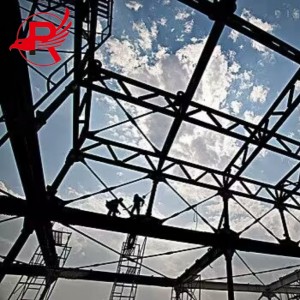
Beautiful Prefabricated Steel Structure At Favorable Prices
Steel structure is a structure composed of steel materials, which is one of the main types of building structures. The structure is mainly composed of beams, steel columns, steel trusses and other components made of profiled steel and steel plates. It adopts silanization, pure manganese phosphating, washing and drying, galvanizing and other rust removal and rust prevention processes. Components or parts are usually connected by welding, bolts or rivets. Because of its light weight and easy construction, it is widely used in large-scale factory buildings, stadiums, and super high-rise areas. Steel structures are susceptible to corrosion. Generally, steel structures need to be derusted, galvanized or painted, and regularly maintained.
-
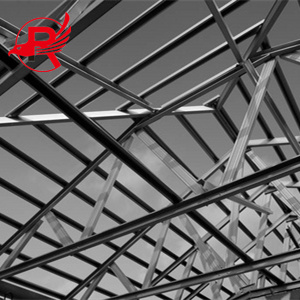
China Steel Structure Residential Building Steel Structure Villa
Steel structure can also be called steel structure grid, steel structure because of energy saving and environmental protection, known as “green materials”. It has light weight, high strength, seismic and wind resistance, and short construction time.Using the steel structure system in residential buildings can give full play to the good ductility and strong plastic deformation ability of the steel structure, and has excellent earthquake and wind resistance, which greatly improves the safety and reliability of the residence. Especially in the case of earthquakes and typhoons, steel structures can avoid collapse damage of buildings.