Advantages:
-
High section modulus-to-weight ratio for efficiency
-
Increased stiffness minimizes deflection
-
Wide design allows easy installation
-
Superior corrosion resistance, with extra thickness at critical points

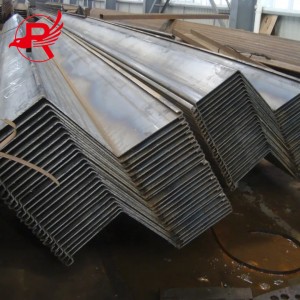
Z-shaped steel sheet piles, a highly effective and widely used retaining material, are named for their resemblance to the letter “Z” in their cross-section.U-type (Larsen) steel sheet piles The two types together make the backbone of modern steel sheet pile engineering with significantly different features in structural performance and field of application.
Advantages:
High section modulus-to-weight ratio for efficiency
Increased stiffness minimizes deflection
Wide design allows easy installation
Superior corrosion resistance, with extra thickness at critical points

Hot Rolled Au Pu 6m-18m U-Shaped Steel Sheet Pile is a durable, high-strength steel piling solution designed for retaining walls, waterfront structures, and earth retention projects.

ASTM I-Beam is a structural steel section with a vertical web and horizontal flanges. It offers high strength-to-weight ratio, excellent load-bearing capacity, and easy fabrication, making it ideal for buildings, bridges, and industrial projects.

A36 H-beam is a popular structural steel with good mechanical properties, good weld-ability and stable performance for building, bridge and industry applications.

Cold-formed U-shaped steel sheet piles in S235, S275, or S355 steel, 6–18 m long, ideal for retaining walls, cofferdams, and foundations.

EN H-Beam Steel is a European standard wide-flange structural steel, it is widely used in building, bridge and industrial construction due to its high strength and good resilience.

ASTM A328 Grade 50 and JIS A5528 Grade A U-shaped steel sheet piles are a type of high-strength, high-durability structural steel sheet piles, widely used in heavy-duty fields such as port engineering, retaining walls, foundation support and water conservancy projects.

U type sheet piles Type B are produced according to the standards of EN 10248 JIS A5528 Grade A and ASTM A328 Gr 55 for use in high strength construction.

ASTM A572 Grade 50 U-Type Steel Pile: High-strength U-shaped steel pile with a yield strength of 50 ksi, suitable for port, bridge and deep foundation engineering.

ASTM A588 and JIS A5528 Grade A U Type Steel sheet piles are high strength and corrosion resistant steel sheet piles, for the support structure applications in ports, docks, river banks, and underground engineering works, etc.
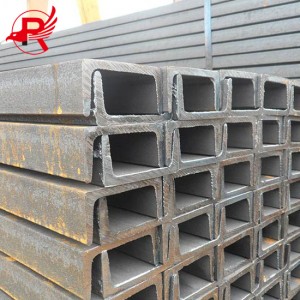
Our U Channels that conform to ASTM are structural steel channels manufactured from A36, A572, A588 and A992 grades. Built strong and versatile, these channels can be used for construction, industrial racks, bridges and heavy load bearing supports.

ASTM A572 U Channel is high strength, low alloy structural steel channel which has many applications in building frames, machinery support, and heavy equipment engineering works and has good strength-to-weight ratio and good weldability.